
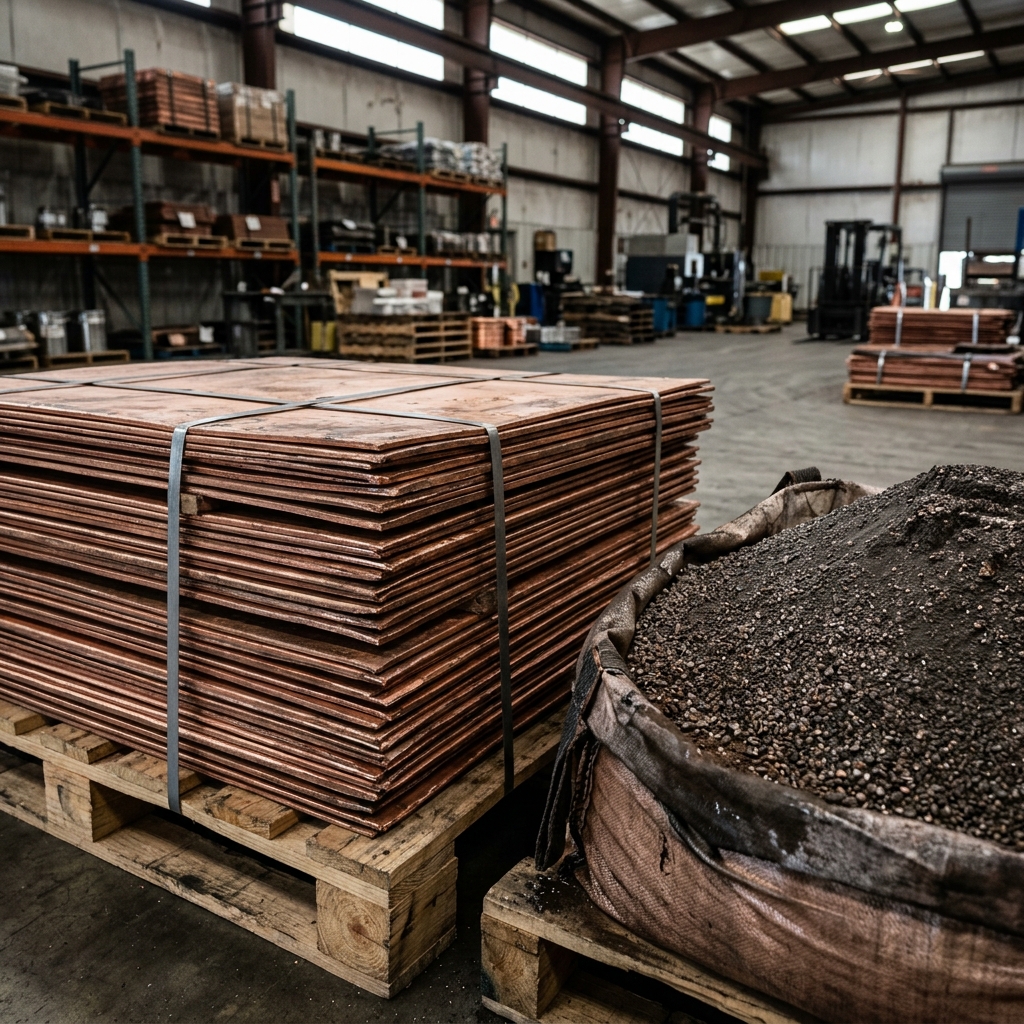
Copper
For centuries, copper has supported economic development, technological advancement, and industrial growth.
Our objective is to connect African copper resources with the industries and markets that depend on them through responsible sourcing, disciplined execution, and transparent supply chains.
Copper in figures - 2026
Uses and Electrification
Why Copper Matters
Copper possesses a unique combination of properties that make it essential across a wide range of industries. Its conductivity, durability, efficiency, and versatility have made it one of the most widely used industrial metals globally.
Unlike many materials, there are few practical substitutes for copper in many of these applications. As societies become increasingly electrified, demand for copper continues to grow.
Copper & Electrification
The global transition toward electrification is one of the most significant economic shifts of our time. Governments, utilities, and industries around the world are investing heavily in power transmission networks, renewable energy projects, grid modernisation, and industrial electrification.
Every electrical system requires copper. Every transmission line relies on copper. Every renewable energy installation depends on copper connectivity.
Digital & Infrastructure
Copper & Digital Infrastructure
The modern economy depends not only on energy but also on information. The rapid expansion of data centres, telecommunications networks, cloud infrastructure, artificial intelligence systems, and advanced computing facilities is creating new demand for copper.
Copper remains a critical component within digital infrastructure because of its efficiency, reliability, and conductivity. The more connected the world becomes, the more essential copper becomes.
Copper & Infrastructure Development
Infrastructure remains one of the most important drivers of economic development. Roads, railways, airports, ports, industrial facilities, utilities, housing, and public infrastructure all rely heavily on copper.
As populations grow and urbanisation continues, infrastructure investment expands. Without copper, infrastructure development slows.
Nola Sourcing & Strategy
Africa's Copper Opportunity
Africa possesses some of the world's most significant copper resources. Several regions across the continent have long histories of copper production and continue to play important roles within global supply chains. As demand increases, these resources are becoming increasingly strategic.
The future opportunity lies in combining production with: responsible development, quality assurance, documentation integrity, traceability, logistics capability, and market access.
Nola's Copper Strategy
Nola's copper strategy focuses on creating transparent and efficient pathways between African copper production and global demand. Our framework integrates:
- Sourcing: Developing relationships and supply opportunities across copper-producing regions.
- Validation: Supporting quality assurance through verification, testing, and technical review.
- Documentation: Strengthening transparency through structured records.
- Logistics: Coordinating movement from source to destination.
Copper Assets & Hubs
Responsible Copper Development
The future of copper development must balance economic opportunity with environmental responsibility and stakeholder accountability. As global demand increases, expectations surrounding responsible sourcing and sustainability continue to grow.
Nola recognises the importance of environmental stewardship, community engagement, and regulatory alignment.
Copper Market Outlook
Many of the trends shaping the global economy are also strengthening demand for copper. These include electrification, urbanisation, infrastructure expansion, renewable energy development, digital transformation, and artificial intelligence.
Together, these forces are increasing the importance of reliable copper supply. While market conditions may fluctuate, the long-term fundamentals remain strong.
Why Nola
Nola's role within the copper value chain is to connect resource opportunities with market demand through systems built on trust, transparency, and operational discipline. We believe successful copper supply chains require accountability, visibility, quality assurance, traceability, and reliable execution.
By integrating sourcing, validation, documentation, logistics, and market access into a single operating framework, we create stronger pathways between African copper resources and the industries that depend on them.
Closing Statement
Copper is more than a commodity. It is a foundation of modern life. It powers infrastructure. It enables connectivity. It supports industrial development. It drives economic growth.
At Nola, we are committed to helping connect Africa's copper resources to the industries shaping the future of the global economy.